|
OPERATOR SIGNAL
|
|
BEFORE THE INVESTMENT COMMITTEE
|
Productivity Proof. Margin Discipline. Liability Memory.
This week, Operator Signal looks at a Healthcare150 survey showing why hospital leaders are prioritizing labor productivity over growth, a diligence framework for separating real workflow savings from software theater, and Bayer-Monsanto as a reminder that inherited liabilities can outlive the original strategic rationale.
|
|
Hi there,
Across all three topics, the message is consistent: buyers should reward operating leverage only when the evidence connects directly to cash, capacity, and downside protection.
In a market where margin stories are easy to tell, the premium belongs to companies that can prove where the economics actually move.
Exact Insight surfaces these patterns early, directly from operator conversations, before they show up in CIMs or IC memos.
Access the full briefing or request expert calls in this sector to go deeper.
|
|
|
INSIGHTS FROM THE NETWORK
Hospital Leaders Are Putting Productivity Ahead of Growth
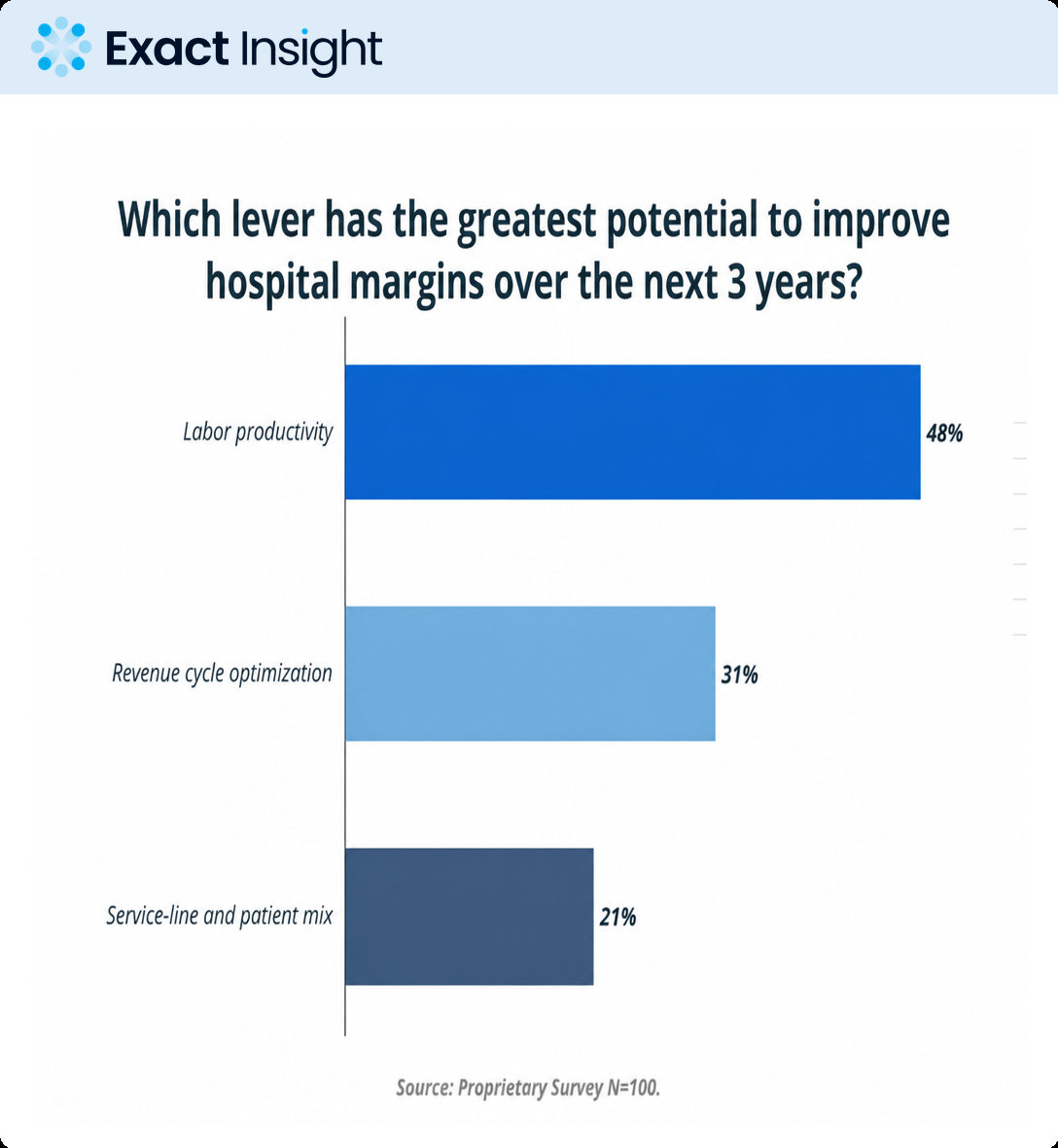
In a recent survey we conducted in partnership with Healthcare150, hospital leaders pointed to a clear hierarchy in margin strategy. Asked which lever has the greatest potential to improve hospital margins over the next three years, 48% of respondents chose labor productivity, 31% chose revenue cycle optimization, and 21% chose service-line and patient mix.
The ranking matters because it puts operating model improvement ahead of expansion. Hospital leaders are not saying growth is irrelevant. They are saying the first margin opportunity sits inside the work already being done: labor deployment, administrative load, scheduling, throughput, documentation, and the ability to produce more output without adding proportional cost.
That creates a sharper standard for healthcare technology and services vendors. A product that automates a task may be useful, but the stronger investment case belongs to solutions that can show measurable labor efficiency, faster revenue capture, or capacity expansion that management can trace into the P&L.
Revenue cycle optimization ranking second reinforces the same point. Providers are still looking for value inside existing activity before underwriting broader mix shifts. For investors, that means the highest-conviction targets will be the ones that can convert workflow improvement into recognized financial outcomes, not just user adoption metrics.
|
|
|
PRE-DEAL INTELLIGENCE
Can This Workflow Product Reach the Budget Line?
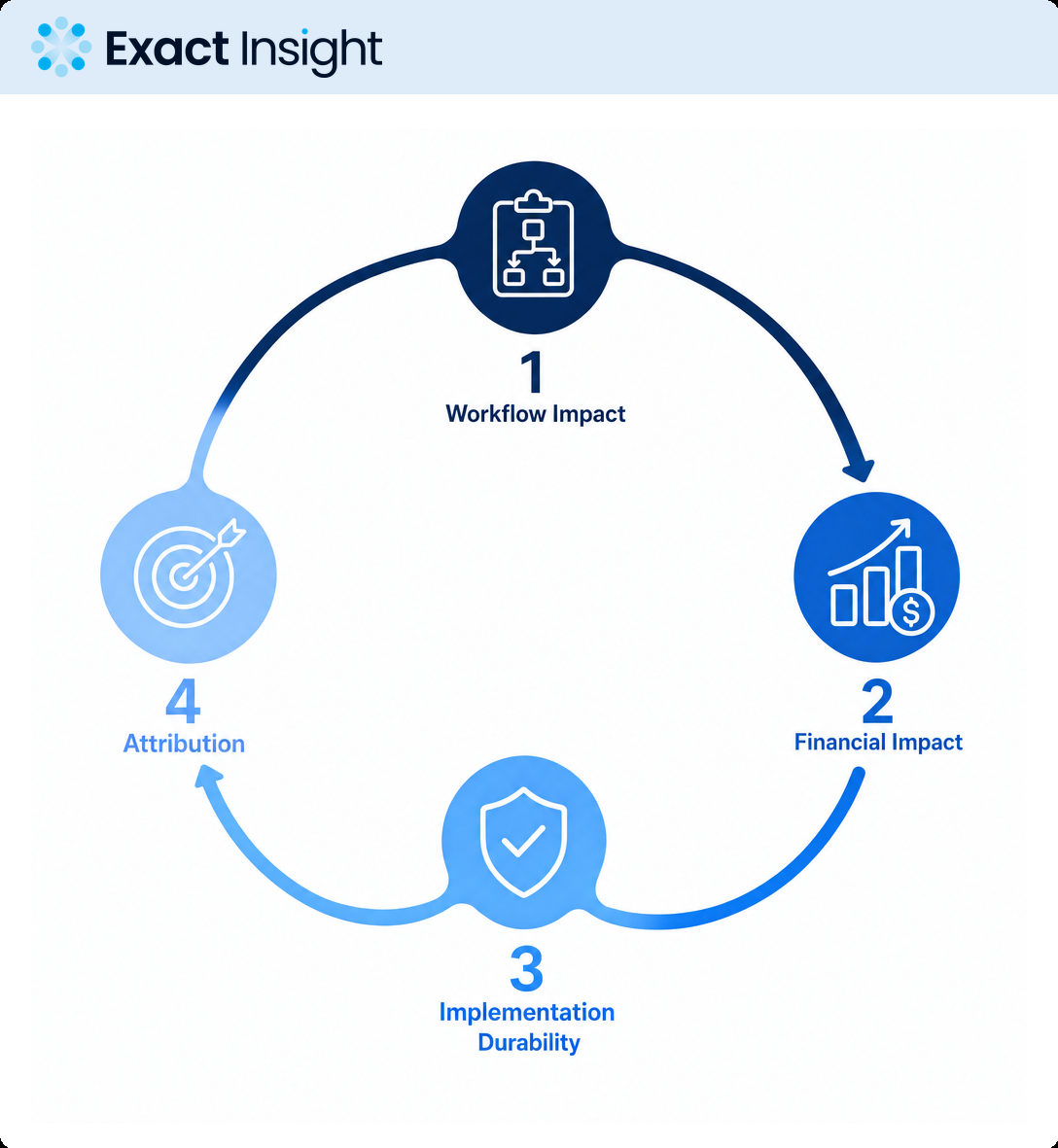
A productivity claim deserves credit only if diligence can follow it from workflow change to financial recognition. The first question is whether the product removes work, compresses work, or merely moves work from one role to another. Minutes saved inside a task do not matter if the system still needs the same staffing model, the same overtime, or the same manual exception handling.
The second question is whether the claimed benefit reaches a controllable cost center. A tool that reduces administrative friction may improve experience, but buyers need to know whether it lowers cost to collect, reduces denial rework, expands clinician capacity, shortens scheduling cycles, or improves cash conversion in a way finance can measure.
The third question is implementation durability. Productivity gains that depend on one champion, one site, or one clean workflow rarely scale across a hospital system. Diligence should test adoption by role, exception rates, integration depth, and whether performance holds when the product meets messy EHR, payer, staffing, and compliance realities.
The final question is attribution. If revenue or margin improved after implementation, what proves the product caused it? Strong targets can connect usage, operational KPIs, and financial outcomes with enough clarity that a buyer can underwrite the improvement before close.
|
|
|
LESSONS FROM THE FIELD
Bayer-Monsanto Shows How Legacy Liabilities Can Overwhelm Strategic Logic
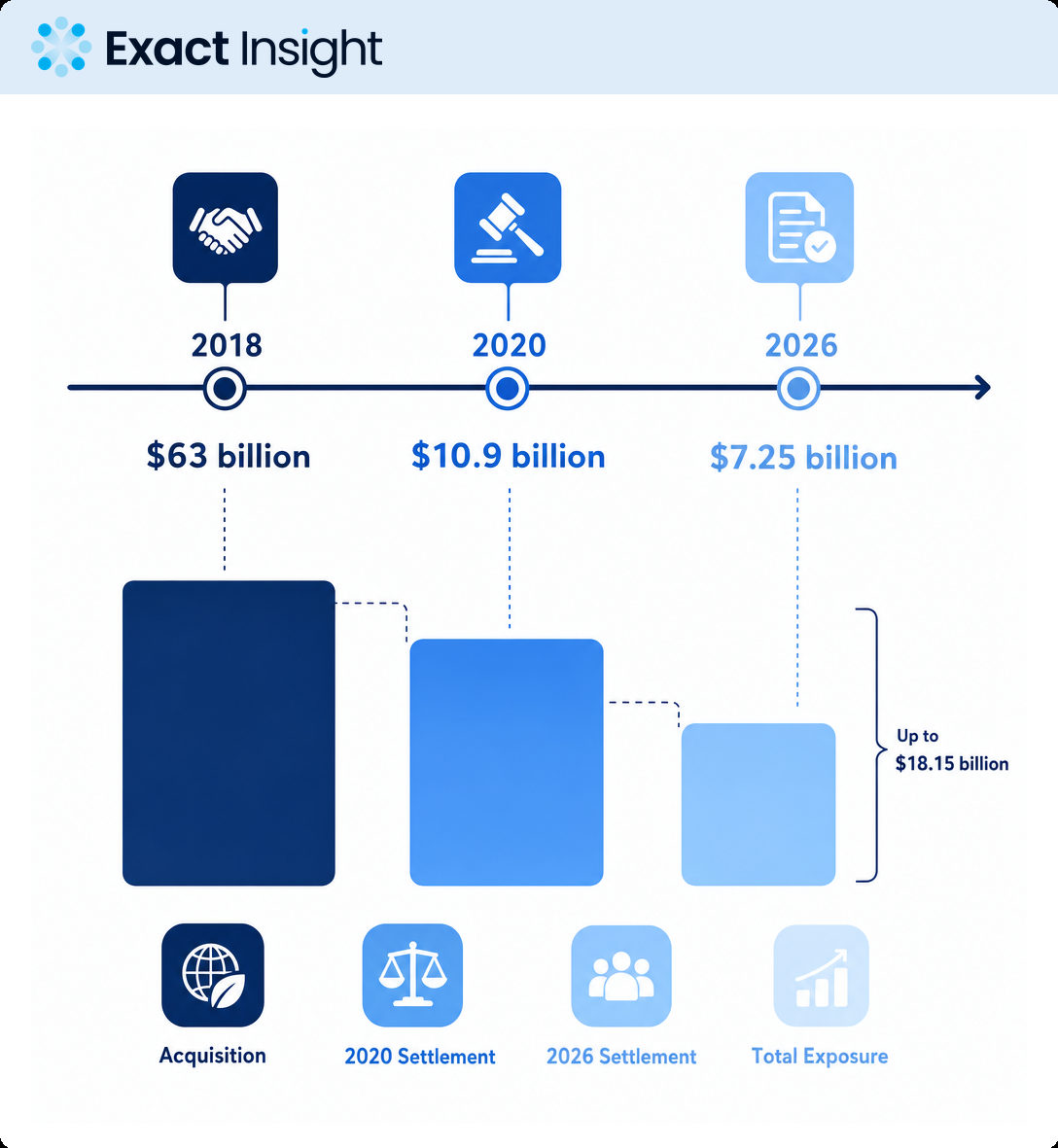
Bayer completed its acquisition of Monsanto in 2018 for $63 billion, seeking a larger global position in agriculture and crop science. The strategic story was scale, innovation, and category leadership. The post-close reality became dominated by Roundup litigation, a liability stream attached to the business Bayer had just bought.
The numbers show how quickly inherited risk can reshape a deal. Bayer agreed in 2020 to pay up to $10.9 billion to settle much of the Roundup litigation. In 2026, Monsanto announced a proposed class settlement funded by declining annual payments totaling up to $7.25 billion over as long as 21 years. Bayer also said litigation provisions and liabilities would increase from 7.8 billion euros to 11.8 billion euros, including 9.6 billion euros for glyphosate.
The lesson is not simply that legal diligence matters. It is that certain liabilities behave less like closing adjustments and more like open-ended operating exposure. Product liability, regulatory uncertainty, reputational damage, and plaintiff momentum can keep compounding long after the buyer believes it has priced the risk.
For acquirers, the diligence question is direct: what risk could still be growing after close, even if today's model treats it as contained? If the answer depends on courts, regulators, scientific consensus, or public trust, the downside case needs to be modeled as a living exposure, not a static reserve.
The diligence lesson is direct: legacy liabilities should be underwritten for how they can evolve after ownership changes, not just for what they cost at signing.
|
|
|
INTERESTING ARTICLES
Worth Your Time
Healthcare private equity: Commercial value creation must start in diligence
Health services: US Deals 2026 midyear outlook
The Revenue Cycle of the Future: AI boom and workflow redesigns accelerate rev cycle transformation
Alvarez & Marsal North America Value Creation Report 2026
|
|
Operator Signal · by Exact Insight
Exact Insight · 170 Mason Street, Greenwich, Connecticut 06830, United States
You're receiving this because you subscribed to Operator Signal.
|
|